We didn’t lose our inner child. We turned it into ArT Toys and More...with purpose.
50% Isn’t the Cut: Murakami & Perrotin
Legacy Before Spotlight: What Murakami & Perrotin Teach Us About Time, Loyalty, and Invisible Labor... A Partnership Forged in Chaos... #00030 ArT Toy Files
ART TOY FILES
Sergio Pampliega Campo & Cristina A. del Chicca
2/23/20265 min read
Uncovering the Stories, Creators and Culture Behind #ArTToys
An Art Toy Gama Perspective
Before the auctions.
Before the giant sculptures in Doha.
Before Kaikai Kiki was a gallery, and Perrotin was a name that echoed across continents...
There was just a fax machine, broken English, and two people trying to make art travel across the world, one manga drawing at a time.
1. A Partnership Forged in Chaos, Not Contracts
What makes the Murakami–Perrotin story extraordinary isn’t its success.
It’s the duration.
32 years of messy, unglamorous, exhausting effort, the kind most people don’t see because they’re too busy looking at the end result.
Their partnership didn’t begin in a showroom.
It began in confusion.
Perrotin, a 25-year-old gallerist with barely enough money to ship art. Murakami, an artist communicating with drawn cartoons over fax because language was a barrier.
That wasn’t strategy.
It was survival.
2. Trust Is Built When Nobody's Watching
They didn’t ask each other for loyalty.
They chose it, again and again, through pressure, creative friction, and projects that nearly fell apart (but didn’t).
Murakami says it clearly:
“I didn’t understand the 50% commission until I opened my own gallery.”
That’s not just about money.
That’s about perspective and realizing that support isn’t always visible, but it’s always there.
3. The Invisible Weight of Representation
The 50% cut galleries take?
It’s not a prize.
It’s a burden.
It covers the sleepless nights, the logistics, the salaries, the losses, the risk.
Murakami admitted he saw that cut as unfair... until he became the one carrying the weight.
And that’s the point:
You don’t understand a system until you hold it up yourself.
4. Loyalty Over Leverage
At any point, Murakami could have walked.
Bigger galleries offered him deals.
He stayed.
Not out of comfort, but out of respect for what they had built, together...
Perrotin didn’t chase only famous names.
He invested in young artists, even when it made his gallery look “less polished” than the giants.
That’s not poor curation.
That’s conviction.
🕰 The Real Timeline of Legacy.
According to Murakami & Perrotin
This isn't theory.
This is the messy, beautiful, painful reality of building something that lasts.
1. One misunderstood drawing at a time
In the early ’90s, email wasn’t an option.
Neither of them spoke fluent English.
So when Perrotin sent Murakami questions by fax…
Murakami replied with 11 pages of hand-drawn manga.
Not to be cute.
To be understood.
This was more than miscommunication. It was invention.
They built a language between them — visual, emotional, instinctive — because there was no other way.
And in that space of confusion, trust started to form.
2. One exhibition that nearly collapsed
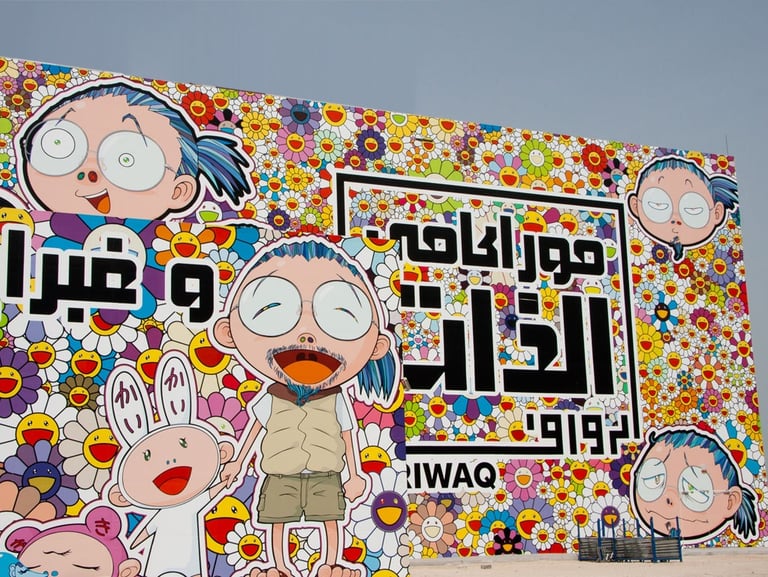
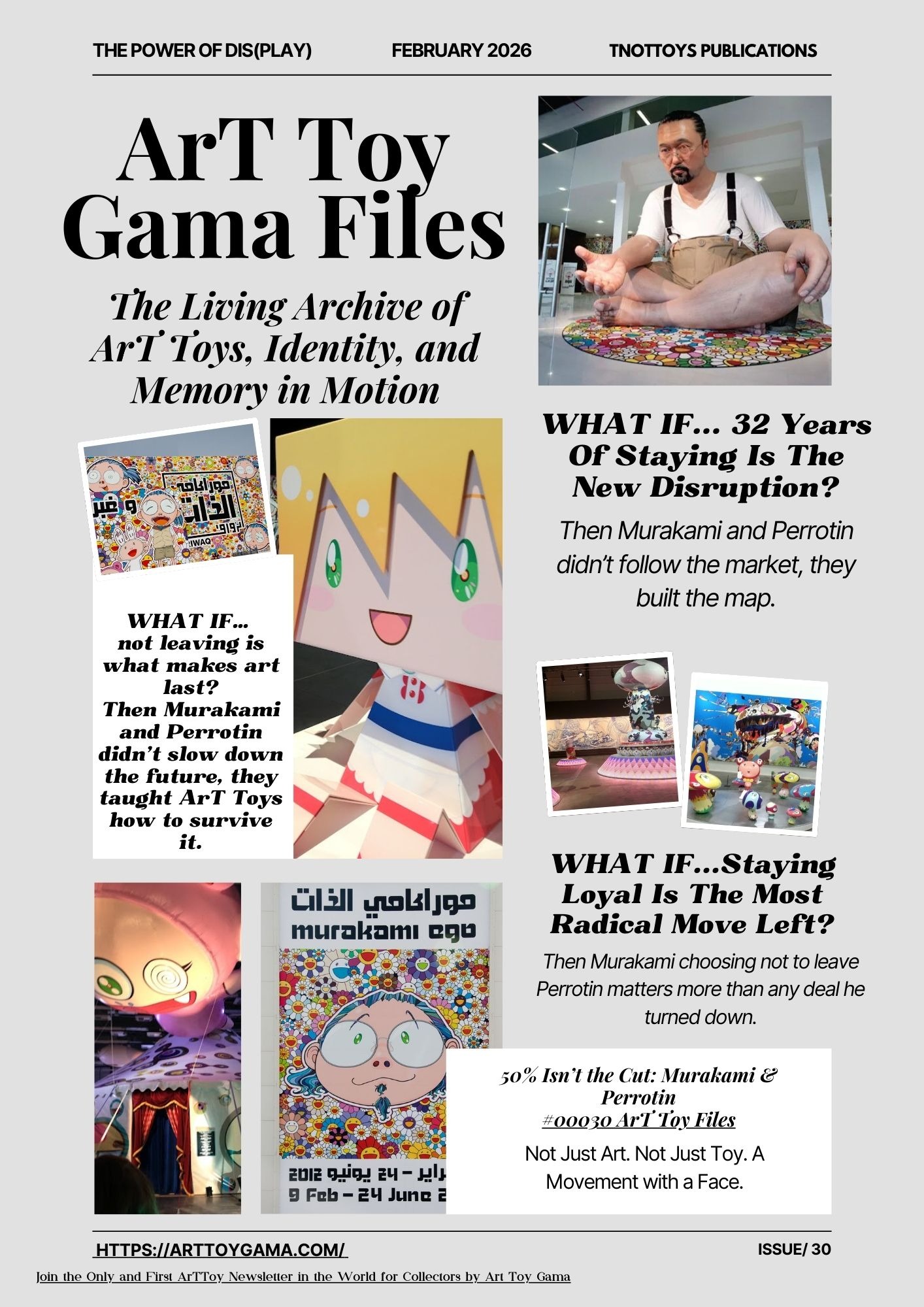
The “Ego” exhibition in Doha (2012) was the biggest project of their careers.
But it almost didn’t happen.
Venue confusion, logistical nightmares, a depressed assistant screaming at both of them, and a building that was, at first, too small to hold the vision.
And still, they didn’t walk away.
They redesigned. They negotiated.
The model Murakami presented was so ambitious, that the museum literally built a new space to match it.
The result? A 5,000 m² show that became a turning point for both their legacies.
3. One disagreement that ended in diplomacy, not drama
Murakami admits it:
He used to be intense. Strict. Ready to fight over perfection.
He tells the story of a show where, unhappy with vinyl prints the night before opening, he made the team redo everything overnight.
But instead of escalating conflict, Perrotin learned to de-escalate.
He brought calm when pressure was breaking everyone.
In Murakami’s own words:
“You told me: Takashi, calm down. You taught me diplomacy.”
And that’s what kept them going, not avoiding tension, but learning to transform it.
4. One refusal to let success break what time built
At least twice, Murakami had offers from the biggest galleries in the world.
Others left Perrotin for faster deals.
He didn’t.
He stayed.
Even when Perrotin had no money, even when his gallery wasn’t the “safest bet,” Murakami trusted the process they had built.
Why?
Because what they shared wasn’t transactional, it was foundational.
This is what no viral drop or sales report can measure:
The intangible weight of staying.
Legacy isn’t made of launches. It’s made of moments like these.
Moments where quitting would’ve been easier, but they chose to stay.
And that’s the real art.
🔁 Why This Matters to the ArT Toy Movement
At Art Toy Gama, we’ve said it before:
Real ArT Toys aren’t built for speed.
They are built for something harder.
And much more important.
🧑🎨 Artists who stay even when trends shift
Not the ones who chase visibility.
The ones who chase truth.
The ones who choose to go deep instead of going viral.
They don't treat vinyl as a shortcut to fame; they treat it as a battlefield for meaning.
They stay in the studio when others rush to market.
They don’t pivot for applause; they craft rebellion into form, over time.
Their ArT Toys don’t “drop.”
They arrive, like memory catching up with you.
These artists don’t sculpt to fit in.
They sculpt to disturb, to resist, to remember.
And that’s why they matter.
🧍♀️ Collectors who return even when others chase the next drop
In a world obsessed with “what’s next,”
some collectors choose to revisit, revalue, and recommit.
They don’t collect hype.
They collect memory.
They know the real value of an ArT Toy isn't in rarity alone, it’s in what it reminds them of.
Who they were when they first saw it.
Why it made them feel something.
They don’t collect to show off.
They collect to show up.
For stories. For identity. For legacy in motion.
To them, collecting isn’t consumption.
It’s curation of a self that refuses to be forgotten.
🏛️ Gallerists and curators who carry weight you’ll never see
They don’t just “sell” or “show.”
They sustain.
They make the invisible structure visible:
paying rent when no sales come in,
fighting for an artist’s space in institutions that still don’t understand vinyl,
absorbing risk so creators can keep creating.
They aren’t middlemen.
They are memory architects.
They build cathedrals from crisis, exhibition from resistance, and trust from decades of friction.
They know that 50% isn’t profit.
It’s the price of protecting vision before it becomes visible.
And when done right, they don't extract.
They elevate.
They endure.
They believe before the crowd does.
This isn’t about “supporting each other.”
It’s about building something worth staying for.
Because hype fades.
But the trust built before the spotlight?
That’s where Memory becomes Movement.
👉 Dive deeper into legacy, time, and trust in our editorial series…and Discover ArT Toys and Fine Art built for staying power, not quick wins:
→ [Explore Our Online Store]
Art Toy Gama
We don’t chase Trends.
We build Memory.
And that takes time.
Join HERE...
The First and Only Art Toy Newsletter Society in the World here: https://emails.arttoygama.com/l/email-subscription
Art Toys. Paintings. Fine Art Prints. Not what You expect.
Real collectors don't follow trends—they redefine them
We didn’t lose our inner child. We turned it into Art.
You collecting, or just hoarding what the algorithm spoon-feeds you?
contact
© 2025. All rights reserved.