We didn’t lose our inner child. We turned it into ArT Toys and More...with purpose.
Emperor Caracalla, Rome and the ArT Toy Signal
Emperor Caracalla made strangers Roman; ArT Toys now connect collectors, artists and galleries through shared myths... This is ArT Toy Gama Newsletter #189
ART TOY NEWSLETTER
Sergio Pampliega Campo & Cristina A. del Chicca
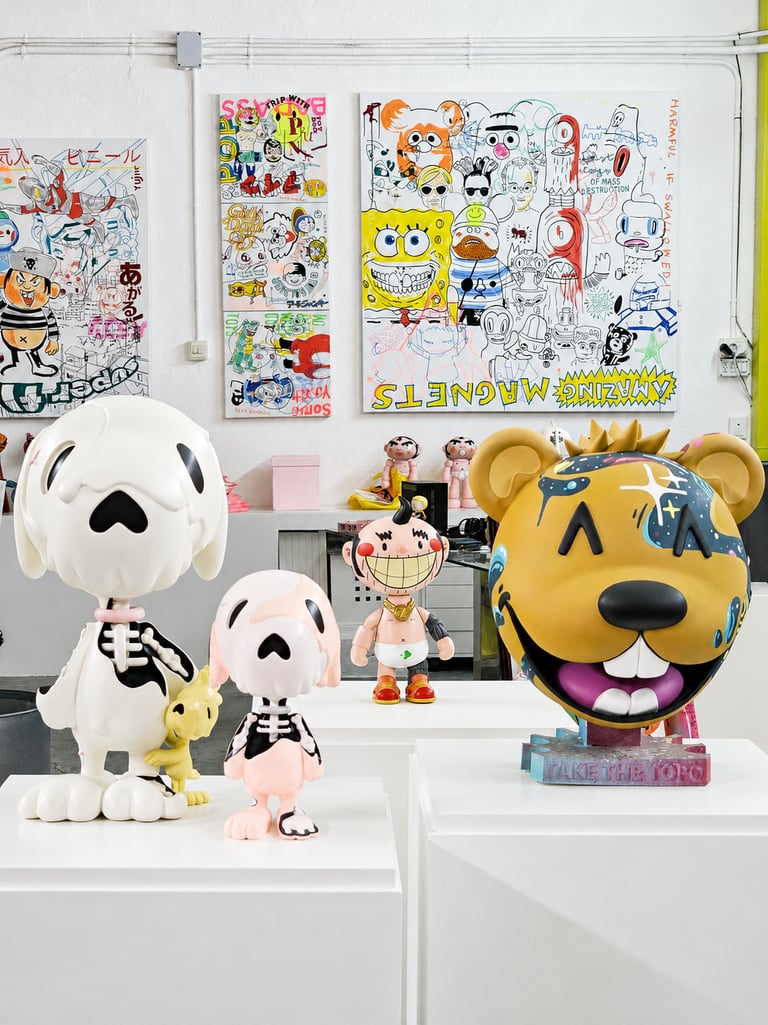
Subject: Caracalla turned distant strangers into Romans; ArT Toys unite collectors, artists and galleries in a shared culture of memory
People do not become a community because they stand in the same room.
They become a community when they recognize the same signal.
A myth.
A symbol.
A book.
A figure on a shelf that says:
“You are not the only one.”
1. The Signal Came From Rome
It started again with Irene Vallejo.
Same book.
Different wound.
In Papyrus: The Invention of Books in the Ancient World, she takes us to Ancient Rome.
But not the postcard Rome.
Not just emperors, marble statues, legions, temples, aqueducts and straight avenues.
This time, the signal comes from the third century.
From a decision that suddenly changed what it meant to belong.
In the year 212 AD, Caracalla granted Roman citizenship to almost all free inhabitants of the empire.
From Britannia to Syria.
From Cappadocia to Mauretania.
From the edges of the known world
to the center that wanted to call itself Rome.
It was a political act.
A legal act.
A symbolic explosion.
Because overnight, millions of provincials became Roman.
And that forced a deeper question:
What really makes people feel part of the same community?
Blood?
Birthplace?
Skin?
Language?
Power?
Vallejo points toward something more subtle.
A fabric made of words, ideas, myths and books.
And that stayed with us.
Because every real movement needs more than members.
It needs a shared language.
2. Rome Was Also a Shared Imagination
Feeling Roman was no longer only about being born in Rome.
Many were not.
Rome had become too large, too mixed, too restless, too full of movement.
Merchants.
Soldiers.
Administrators.
Freed slaves.
Provincials.
Migrants.
People crossing roads, borders, ports and cities.
A population in motion.
And still, Rome tried to turn distance into identity.
Not only through law.
Not only through taxes.
Not only through power.
Through recognition.
The same forums.
The same baths.
The same libraries.
The same inscriptions.
The same stories of Achilles, Hector, Aeneas and Dido.
A person could live far from the capital and still feel part of Rome because the symbols had travelled before them.
Books moved.
Stories moved.
Myths moved.
Ideas moved.
And slowly, people who had never met began to understand themselves through the same cultural mirror.
That is powerful.
Because identity rarely begins with a document.
It begins when someone, somewhere, recognizes the same signal.
3. Books Created a Community Before Algorithms Existed
Vallejo describes how texts crossed the empire.
Essays.
Fictions.
Stories.
Ideas.
They moved from one end of the known world to the other.
They found shelter in public libraries.
Private libraries.
Bookshops.
Homes.
Cities far from each other.
Brindisi.
Carthage.
Lyon.
Reims.
People of different origins were seduced by the same books.
Not millions.
Not a mass culture like today.
But for that time, something extraordinary:
A community of readers spread across several continents
and united by the same stories.
That line matters.
Because it proves something the algorithm keeps trying to fake.
Community is not noise.
Community is shared meaning.
4. Maybe ArT Toys Are Our Moving Myths
This is where ArT Toys enter.
Not as decorative objects.
Not as trend trophies.
Not as plastic excuses for adults who refuse to grow up.
As moving symbols.
An ArT Toy can travel from an artist’s studio to a collector’s shelf.
From a gallery to a stranger’s memory.
From a shop window to a conversation.
From a fair booth to someone’s private mythology.
Different countries.
Different scenes.
Different languages.
Different obsessions.
And still, something happens.
You see a figure and feel the signal.
Then someone else feels it too.
An artist.
A collector.
A curator.
A gallerist.
A shop owner.
A future friend.
A stranger who suddenly seems less strange.
The object becomes a meeting point.
The collection becomes a map.
The shelf becomes proof that your way of seeing the world has company.
5. Every Movement Needs Stories Stronger Than Inventory
Rome had roads.
But roads alone do not create belonging.
Rome had armies.
But armies alone do not create identity.
What travelled underneath was deeper.
Words.
Ideas.
Myths.
Books.
The ArT Toy Movement needs the same depth.
Not more hype.
Not more empty drops.
Not more objects thrown into the feed to die after forty-eight hours.
It needs stories that help us understand why we collect.
Why artists create characters instead of explanations.
Why collectors protect strange objects like emotional evidence.
Why galleries defend pieces the old art world still misreads.
Why curators create context around things that refuse to behave.
Why shops can become cultural shelters.
Why a figure, a painting or a print can make two people say:
“You see it too.”
That is how belonging begins.
Not by forcing everyone to think the same.
By giving the right people a shared signal.
Maybe ancient Rome had myths, books and roads.
Maybe we have ArT Toys, paintings, fine art prints and Dis(Play).
Maybe your collection is not only showing who you are.
Maybe it is calling the people who can understand you.
#######
Irene Vallejo reminds us that communities are built through what travels between people.
Words.
Images.
Stories.
Symbols.
Books.
And today, maybe ArT Toys are doing their own version of that work.
They move from hand to hand.
Studio to shelf.
Gallery to collector.
Collector to collector.
Object to memory.
Memory to conversation.
They turn distance into recognition.
They turn collecting into language.
They turn strangers into people who feel part of the same strange, beautiful, rebellious signal.
That is why Dis(Play) matters.
Because the object is only the visible part.
The deeper thing is what it connects.
######
Discover ArT Toys, paintings and fine art prints
created for those who refuse to collect without meaning.
Explore the Art Toy Gama Shop.
Read more stories in our Blog.
📍 Join the First and Only Art Toy Newsletter Society in the World here: https://emails.arttoygama.com/l/email-subscription
Start building a collection that does more than occupy space.
Let it travel.
Let it speak.
Let it connect you to the people who recognize the same myths.
Art Toy Gama
Where Dis(Play) becomes Memory.
This email was originally sent to the Newsletter subscriber list on May 31, 2026
Tuesdays 16:12. Thursdays 17:47. Sundays 18:32.
3 times a week, we don’t send a Newsletter.We jam the signal.
Art Toys. Paintings. Fine Art Prints. Not what you expect.
Real collectors don't follow trends—they redefine them
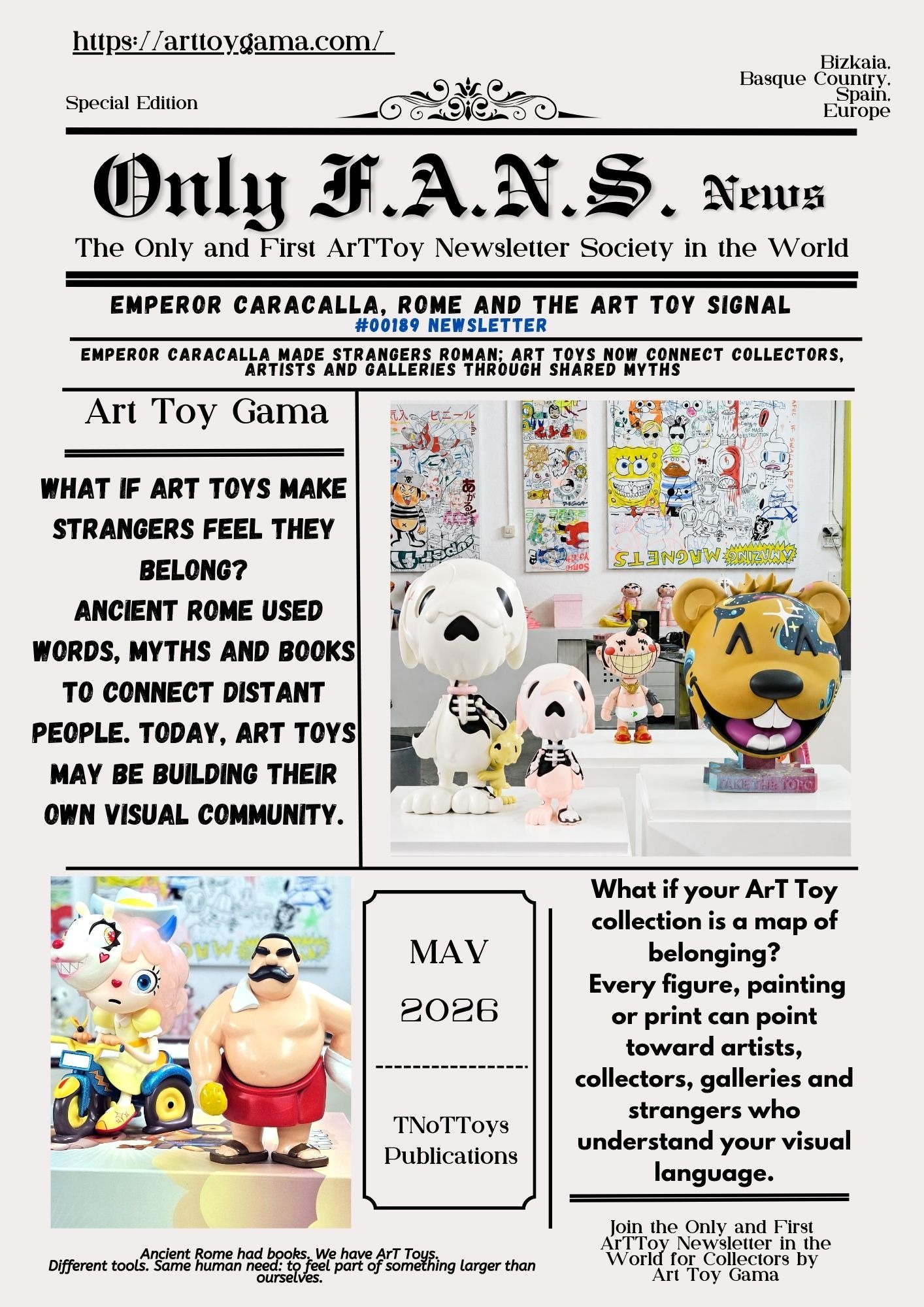
We didn’t lose our inner child. We turned it into Art.
You collecting, or just hoarding what the algorithm spoon-feeds you?
contact
© 2025. All rights reserved.