We didn’t lose our inner child. We turned it into ArT Toys and More...with purpose.
Since When Can You Write ArT Toys Like That? ArTToys
An ArT Editorial on why we write ArTToys like this, and why it means more than it seems for the ArT Toy Movement and those who live it. #00028 ArT Toy Files
ART TOY FILES
Sergio Pampliega Campo & Cristina A. del Chicca
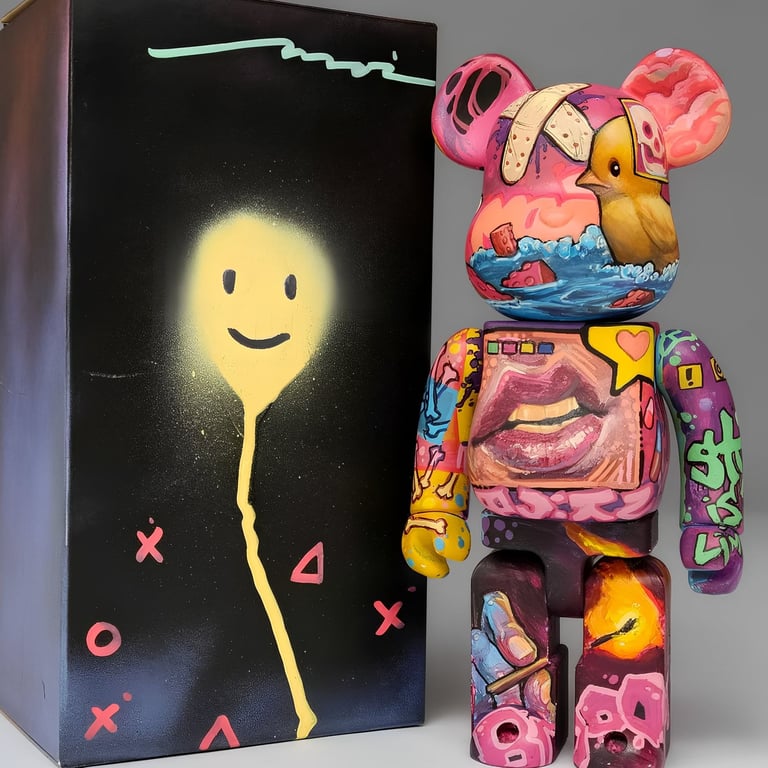
Uncovering the Stories, Creators and Culture Behind #ArTToys
An Art Toy Gama Perspective
Why We Write ArTToys, and Why It’s Not Just a Word
You might have seen it.
Maybe it made you pause.
Maybe it made you raise an eyebrow.
Maybe it even made you laugh.
“ArTToys… Boo! Since when do words end with a capital letter?”
“And who decided you could just smash Art and Toys into one word?”
We’ve started seeing these comments more and more, especially in some forums.
People questioning the way we write the word…
without ever stopping to ask why.
Some do it playfully.
Some, not so much.
Some just laugh. Others get surprisingly angry.
But what very few seem to do is stop and ask: why?
And so, although we already touched on this in Cristina’s Instagram months ago (@bydelchicca),
we realized something deeper was needed, something slower, more deliberate.
So here it is.. Let’s talk about it.
Because what looks like a typo to some…
is something very different to us.
Chapter 1. Not A Typo. A Threshold.
Let’s be honest: we never fully explained it.
Not in captions. Not in drops. Not even in our Manifesto.
Until now.
The double capital T wasn’t a mistake.
It wasn’t a design flourish.
It was a decision.
A rupture.
A way to mark the collision between two worlds that were never supposed to meet:
the world of institutional Art, academic, exclusive, often inaccessible…
and the world of Toys as most people know them: mass-produced, commercial, disposable.
Because when many people hear the word toy, they think of bright plastic, children’s shelves, gift shops, cartoon packaging.
They think of things that are meant to entertain, then be forgotten.
They don’t think of critique, memory, or identity.
They don’t think of storytelling in vinyl, rebellion in resin, or irony in sculptural form.
But that’s exactly where ArTToys live:
in the tension between form and function, between play and discourse.
They don’t come from the art market or the toy industry.
They come from the crack in between.
The rupture in the word ArTToys is not aesthetic.
It’s symbolic.
A gateway to something that resists classification.
And that’s why we write it that way.
Chapter 2. Why Break A Word At All?
Let’s flip the question:
Why shouldn’t we?
If Apple can turn glass into ritual,
If Nike can sell identity before footwear,
If Netflix can teach culture through an algorithm,
If LEGO can make architecture out of children’s bricks...
Then why not let two capital T’s carry a manifesto?
Words carry weight.
Typography can disrupt.
And what we’re building here,
what all artists, collectors, curators and galleries in the ArT Toy world are building,
is a language of forms.
We don’t write ArTToys to be clever.
We write it to signal: this is different.
This isn’t art that asks to be decoded in white cubes.
And it isn’t toys built for childhood.
It’s art that speaks from memory, rebellion, nostalgia, and friction.
And it’s toy culture that refuses to be infantilized.
Chapter 3. The Problem With “Toy”
We’ve been working in this universe of #ArTToys for years.
Years of creating, collecting, curating.
And yet, we still hear it:
“My kid would love that.”
It happens all the time.
And once that sentence drops, it’s hard to bring it back.
Because when someone hears art and toy in the same sentence, their mind closes the door before the piece can open it.
No matter how deep the concept,
no matter how powerful the execution,
no matter how loaded the story…
they’ve already filed it under “cute.”
And that’s why we had to name it differently.
Because this ArTToy isn’t for them.
It’s for those who recognize the nuance.
Those who see not a figurine, but a message in disguise.
Not a collectible, but a code.
Not merchandise, but memory.
Chapter 4. A Symbolic Fracture
That double T may look like a glitch.
But to us, it’s a torii gate (鳥居):
that traditional Japanese structure that separates the mundane from the sacred.
That’s what we see when we write it.
Not a typo. Not an affectation.
A boundary. A threshold.
Because for us, ArTToys are not decorations.
They’re declarations.
They interrupt silence.
They refuse stillness.
They smuggle history into design.
They bring irony to color.
They stretch the definition of what can be said through
sculpture, packaging, pose, eyes, vinyl, resin…paint.
They are not made to be liked.
They’re made to be felt.
Chapter 5. Who It Tries To Talk To
ArTToys try to speak.
Not to everyone.
But to those who know how to listen.
To the collectors who build identity through vinyl, resin, ink and obsession.
To the artists who choose this medium because it lets them deform, exaggerate, resist.
To the curators, shop owners and galleries who believe this world deserves space, not as an exception, but as a category of its own.
To the brands who collaborate with creators not to ride a trend, but to speak a truth.
We believe ArTToys carry stories.
We believe they challenge language itself.
And yes, we believe they deserve their own name: however strange it looks at first glance.
Chapter 6. A Name That Looks Wrong, But Feels Right
Maybe the name ArTToys made you pause the first time you saw it.
Maybe it still makes you pause.
Maybe it looks wrong.
But maybe… it felt strangely familiar.
Maybe one of these figures spoke to a part of you that you hadn’t named yet.
Maybe it told a story you didn’t know how to tell.
Maybe it looked ridiculous, but felt real.
Maybe it didn’t match your shelf, but matched your scar.
That’s when you know.
This word wasn’t made to be “correct.”
It was made to open something.
Conclusion: It’s Not Just How We Write. It’s Who We Are.
We didn’t write this to win a debate.
We’re not here to justify a graphic decision.
We’re here to build a language.
One that speaks memory. Identity. Legacy.
One that crosses borders and expectations.
One that welcomes artists, collectors, curators, galleries, brands and rebels
into a sanctuary that refuses to conform.
So yes, you have 2 options:
You can see the word ArTToys as a typo.
And you wouldn’t be wrong.
Or you can choose to look a little deeper.
At what the letters are trying to hold.
At what the form is trying to fracture.
At the door it’s quietly trying to open.
Because Art Toy Gama was never about fitting in.
We’re here to open portals.
And crossing one…
means choosing to see beyond what words seem to say.
Want To Go Further With Us?
If this post gave you something to think about,
you might enjoy being part of what we share more often.
We send out a Newsletter. Not with noise. With stories.
With thoughts, questions, fragments from the world of ArTToys and the people behind them.
No pressure. No hype.
Just an honest way to stay connected.
Join HERE...
The First and Only Art Toy Newsletter Society in the World here: https://emails.arttoygama.com/l/email-subscription
We’d be glad to have you on the other side of the TT...
Art Toys. Paintings. Fine Art Prints. Not what You expect.
Real collectors don't follow trends—they redefine them
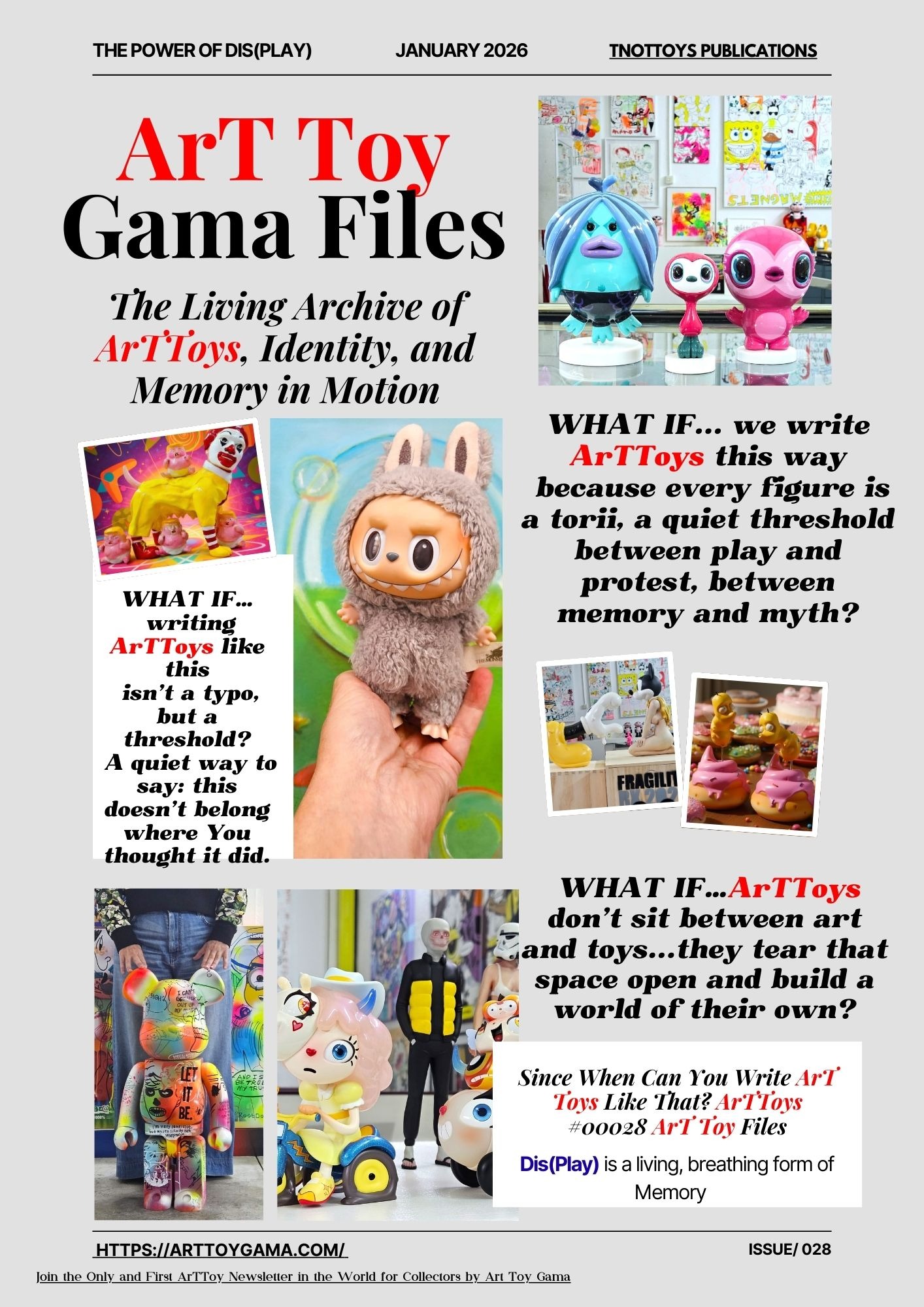
We didn’t lose our inner child. We turned it into Art.
You collecting, or just hoarding what the algorithm spoon-feeds you?
contact
© 2025. All rights reserved.