We didn’t lose our inner child. We turned it into ArT Toys and More...with purpose.
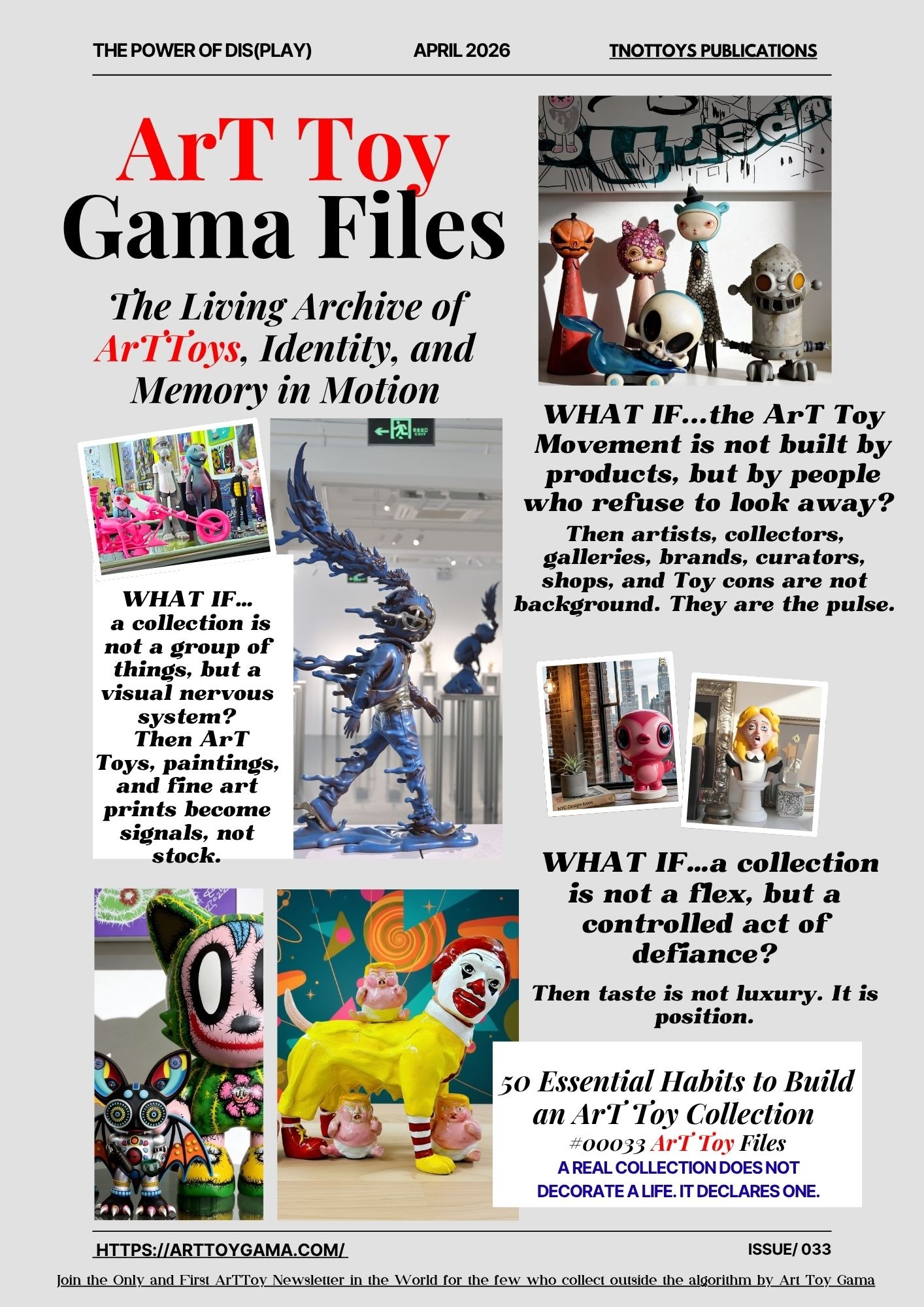
50 Essential Habits to Build an ArT Toy Collection
50 Essential Habits to Build an ArT Toy Collection That Actually Means Something. The most dangerous thing in collecting is not... #00033 ArT Toy Files
ART TOY FILES
Sergio Pampliega Campo & Cristina A. del Chicca
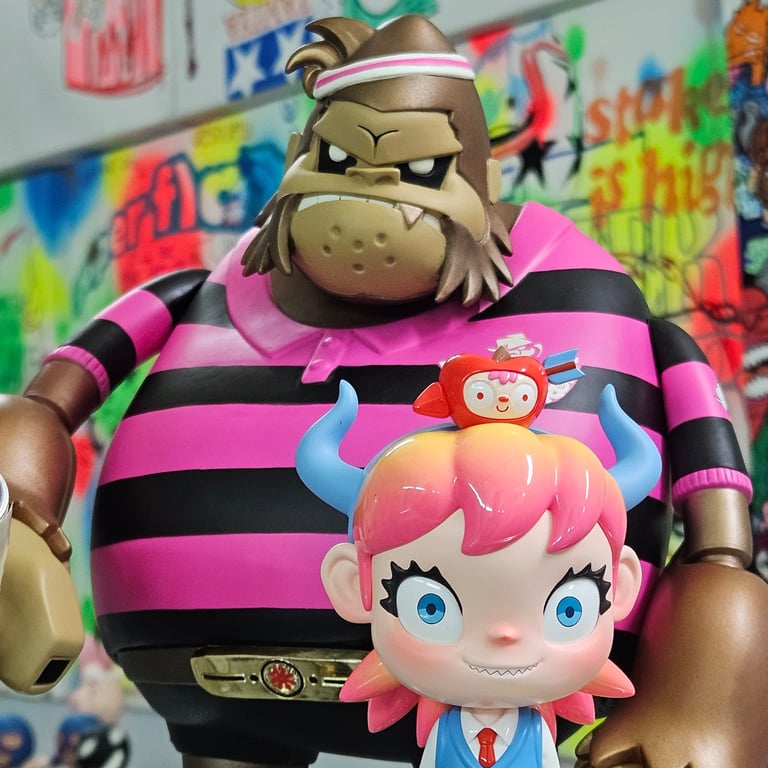
Uncovering the Stories, Creators and Culture Behind #ArTToys
An Art Toy Gama Perspective
Collecting is not just buying.
But it is not a religion either.
A collection can be memory, identity, instinct, error, even contradiction.
Sometimes it’s a statement.
Sometimes it’s just something you loved at the right moment.
The point is not to collect “perfectly.”
The point is to collect with awareness.
At Art Toy Gama, we don’t believe in empty objects.
We believe in ArT Toys, paintings, and fine art prints as living forms inside the ArT Toy Movement; forms that can carry memory, identity, legacy, contradiction, and meaning.
Here’s a better way to think about collecting:
1. Train your eye before your wallet
Taste improves with exposure, not urgency.
2. Buy the piece, not the pressure
Scarcity creates tension. That doesn’t mean it creates value.
3. Learn about the artist, but don’t over-intellectualize
Context helps. Obsession can paralyze.
4. Let your collection reflect you, even if it’s inconsistent
Coherence is powerful, but so is contradiction.
5. Mix formats freely
ArT Toys, paintings, fine art prints… mediums don’t compete, they expand.
6. Keep a note on why you bought something (if it matters to you)
Not mandatory. But useful when memory fades.
7. Document your collection
Photos, lists… whatever works. Your future self will thank you.
8. Keep provenance when possible
Not romantic, practical.
9. Display with intention
But don’t over-design the life out of it.
10. Give pieces space, if you can
If not, accept density as part of your aesthetic.
11. Protect your work
Sunlight, humidity, dust: silent destroyers of ArT Toys, paintings, and fine art prints alike.
12. Rotate your dis(play) occasionally
Not mandatory. But it refreshes your perception.
13. Set a budget
Freedom without limits often ends in regret.
14. Accept that you will miss releases
You’re building a collection, not chasing completeness.
15. Don’t only buy what “fits”
Sometimes friction creates the most interesting moments.
16. Learn materials
Vinyl, resin, paper, ink… they age differently, and that matters inside the ArT Toy Movement.
17. Understand scale
A great piece in the wrong size becomes a problem.
18. Develop a point of view
Even if it evolves, or contradicts itself later.
19. Understand the ecosystem
Artists, brands, galleries, shops, fairs, curators, publications, and collectors… it’s all connected.
20. Talk to other collectors
Without ego. You’ll learn faster.
21. Build real relationships
Not networking, connection.
22. Don’t confuse price with importance
Expensive doesn’t mean meaningful.
23. Let nostalgia in, but keep it in check
Memory is a door, not a compass.
24. Keep at least one piece that challenges you
Comfort is not always where growth happens.
25. Create small rituals
They make the collection feel alive.
26. Revisit what you already own
New purchases are loud. Old ones speak softer, but deeper.
27. Record context when relevant
Where you bought it. Who you were then.
28. Occasionally buy something outside your taste
Not randomly, but consciously.
29. Ignore trends sometimes
But don’t pretend you’re immune to them.
30. Think in terms of building, not accumulating
But accept that sometimes you will still accumulate.
31. Think long-term
Trends move fast. Collections don’t have to.
32. Organize your collection in a way that works for you
Not what looks best on Instagram.
33. Experience the scene physically
Fairs, shows, galleries, studio visits...context changes perception.
34. Keep something accessible for newcomers
Collections can invite, not intimidate.
35. Leave space for affordable pieces
Value is not always tied to price.
36. Look forward, not only backward
New voices matter in the ArT Toy Movement too.
37. Pay attention to details
Finishes, signatures, production quality.
38. Keep at least one timeless piece
Trends fade. Some things don’t.
39. Learn the canon, but don’t worship it
Influence is a starting point, not a destination.
40. Don’t confuse spectacle with depth
Some things impress quickly and fade just as fast.
41. Understand where you’re buying from
Primary vs. secondary market changes everything in ArT Toys, paintings, and fine art prints.
42. Keep ephemera if it adds value for you
Catalogs, invites, materials...optional, not mandatory.
43. Find patterns in your collection
Even accidental ones.
44. Go beyond product pages
Interviews, texts, context...it all adds layers.
45. Understand editions
Limited doesn’t always mean rare. Rare doesn’t always mean valuable.
46. Attend events, even if you don’t buy
Presence builds understanding.
47. Follow artists beyond one format
In the ArT Toy Movement, creativity rarely stays in one lane.
48. Be careful with blind consumption
Surprise is fun. Habitual randomness is not taste.
49. Think of collecting as a long process
Not a series of isolated purchases.
50. Leave something unresolved
A collection that is “complete” is often finished in the worst way.
Final thought
A collection doesn’t need to be perfect.
It needs to be yours.
Not optimized.
Not justified.
Not explained to exhaustion.
Just built, over time,
with enough awareness to know what you’re doing…
and enough freedom to sometimes ignore it.
Because in the end, collecting is not about proving anything.
It is about deciding, quietly, stubbornly...
what deserves to stay.
Inside your life.
Inside your space.
And, whether you realize it or not, inside the ArT Toy Movement you are helping keep alive.
Read also this POST:
How to Build an ArT Toy Collection That Matters
The First and Only Art Toy Newsletter Society in the World here:
Art Toys. Paintings. Fine Art Prints. Not what You expect.
Real collectors don't follow trends—they redefine them
We didn’t lose our inner child. We turned it into Art.
You collecting, or just hoarding what the algorithm spoon-feeds you?
contact
© 2025. All rights reserved.